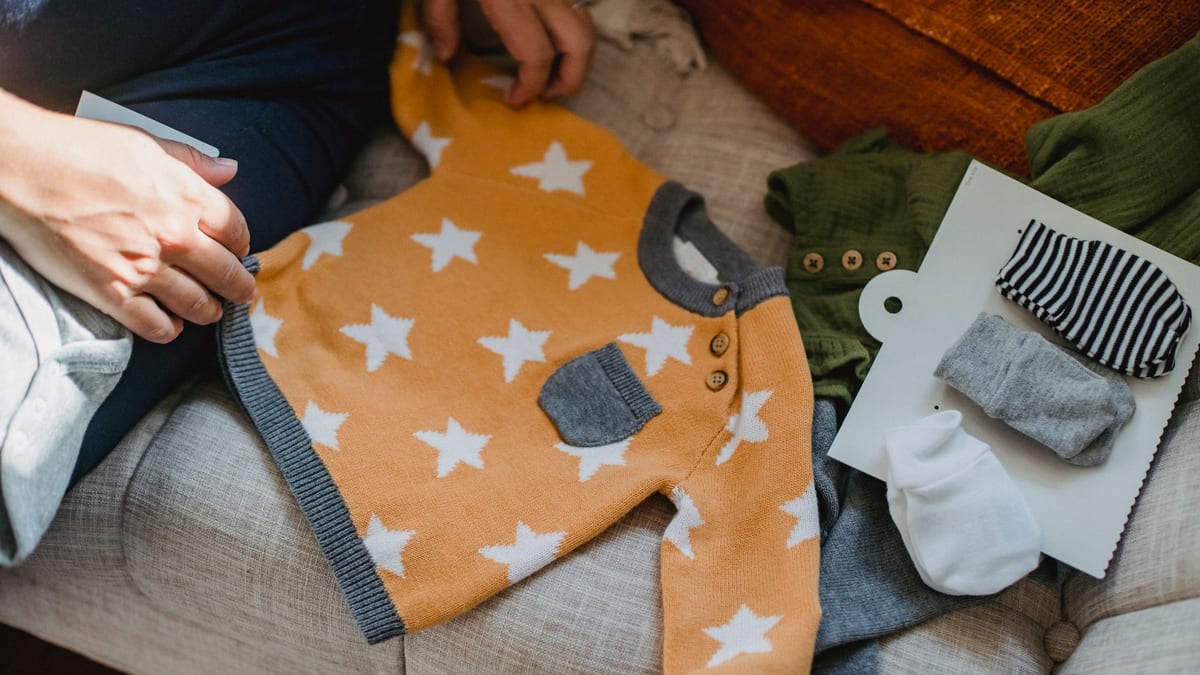
Most garment safety problems are about what a product does over time. This one is about what it does in a single moment, and that makes it different in kind.
BS EN 14682 is the standard covering cords and drawstrings on children’s clothing. If you are putting a children’s range into the UK, it is the first thing your buyer, your retailer and your testing house will ask about.
What the standard is actually about
Entrapment. A cord on a child’s garment can catch — on playground equipment, a slide, a bus door, a car door, a bicycle. The consequences at the neck are the serious ones, which is why the neck and hood area is treated as the highest-risk zone in the standard and restricted most tightly.
Away from the neck, the concerns are different but real: free ends that can catch, loops that can snag, and cords at the hem of a garment that can be trodden on or caught in a moving part.
The standard sets out where cords are not permitted at all, where they are permitted with restrictions, and how they must be finished — and it treats different age bands differently, because a garment for a three-year-old and one for a thirteen-year-old are not the same risk.
We are a knitwear manufacturer, not a compliance consultancy. Treat everything above as the shape of the problem rather than as the requirement. The standard is revised, your product type and age bands determine what applies, and the responsibility sits with the party placing the goods on the market — usually you, not the factory abroad. Confirm the current version and scope with your own testing house or lawyer before you finalise a range.
The simplest answer is no neck cords
Designers reach for a neck drawcord because it looks like a hoodie should look. There is almost always a way to get the same line without one:
- Elasticated hood opening — holds shape, no free ends
- Self-fabric ties sewn closed at both ends, so nothing can be pulled through
- A faux cord printed or applied decoratively, doing the visual job with no function
- Rib or bound edge at the hood opening
We build children’s styles without neck drawcords as standard and use these alternatives instead. That is a design constraint we apply before anyone asks, because it removes an entire category of problem rather than managing it.
Questions worth putting to a factory
Not “do you comply with BS EN 14682” — everybody says yes to that. Ask what they actually do:
“What do you use instead of a neck cord on children’s styles?” A factory that has thought about this has a standard answer and can show you garments. One that has not will say it depends on your design, which means it is your problem.
“What happens if my tech pack includes a cord you think is a risk?” The answer you want is that they raise it before cutting. A factory that will run whatever you draw without comment is not protecting you, and the liability lands on you rather than on them.
“How are cords and ties secured?” Free ends, knots, toggles and the method of attachment all matter. Ask specifically about anything that could be pulled through a channel.
“What documentation can you supply?” Fabric and trim specifications, and support for third-party testing. SGS, Bureau Veritas and Intertek all operate in India and can inspect before the container is sealed.
The broader list of questions for a children’s wear factory covers small parts, traceability and labelling alongside this.
Where cords are not the only risk
Cords get the attention because they have a standard named after them. Two others belong in the same conversation:
Small parts. Buttons, poppers, appliqués, beads and zip pulls are choking hazards on younger children’s garments, and they are also the components most likely to be quietly substituted if a trim runs short mid-run. Ask whether the trim supplier is fixed for the run.
Traceability. If a problem surfaces after delivery, can the factory identify which fabric lot, dye lot and production date your affected cartons came from? This is the difference between a contained recall and an open-ended one, and nobody asks until they need it.
Children’s activewear is the case people forget
Hoodies get the attention, but the garment that most often arrives with a cord nobody thought about is children’s sportswear — a drawcord at the waist of training bottoms, or a cord through a hood on a warm-up top.
The risk is the same and the setting is worse, because the garment is worn while the child is running around equipment. Design it out at the same point you would on a hoodie: elastic at the waist, a closed self-fabric tie, or nothing at all.
It is also a different specification in every other respect — fibre, seam type and decoration method all change on performance fabric, and what a sportswear tech pack needs covers the rest of it.
Getting it right at design stage, not at inspection
The expensive version of this problem is discovering it at pre-shipment inspection, when the garments exist.
Three things that move it earlier:
- Decide the age bands before you design. They change what applies.
- Send the tech pack to your testing house before sampling, not after. A half-hour review is cheaper than a re-cut.
- Get the factory’s alternatives in the sample, so you are approving a real garment rather than a drawing.
A children’s range that has been through this properly samples once. One that has not can lose a season to it.
We manufacture children’s knitwear in Tirupur for UK brands and wholesalers — no neck drawcords, minimal hard trims, flat labels rather than scratchy woven tags, and the fabric and trim documentation your compliance team will ask for. Ranges start at 300 pieces per style per colour. Send us a tech pack and we will tell you before we cut if something in it worries us.
Keep reading
Children's clothing manufacturers: what to ask before you order
Children's garments carry obligations adult ones do not — cords, trims, labelling and traceability. The questions a UK buyer should ask a factory before placing an order, and what a good answer sounds like.
CPSIA and children's clothing: what US importers must check
Children's apparel entering the US carries obligations adult garments do not — testing, certification and tracking labels. What CPSIA covers and the questions to put to a factory.
UK textile labelling: what must legally be on the label
Fibre composition is the legal requirement. Care symbols, importer details and size are commercial necessities that get mistaken for law. The difference matters, and so does who carries the obligation.