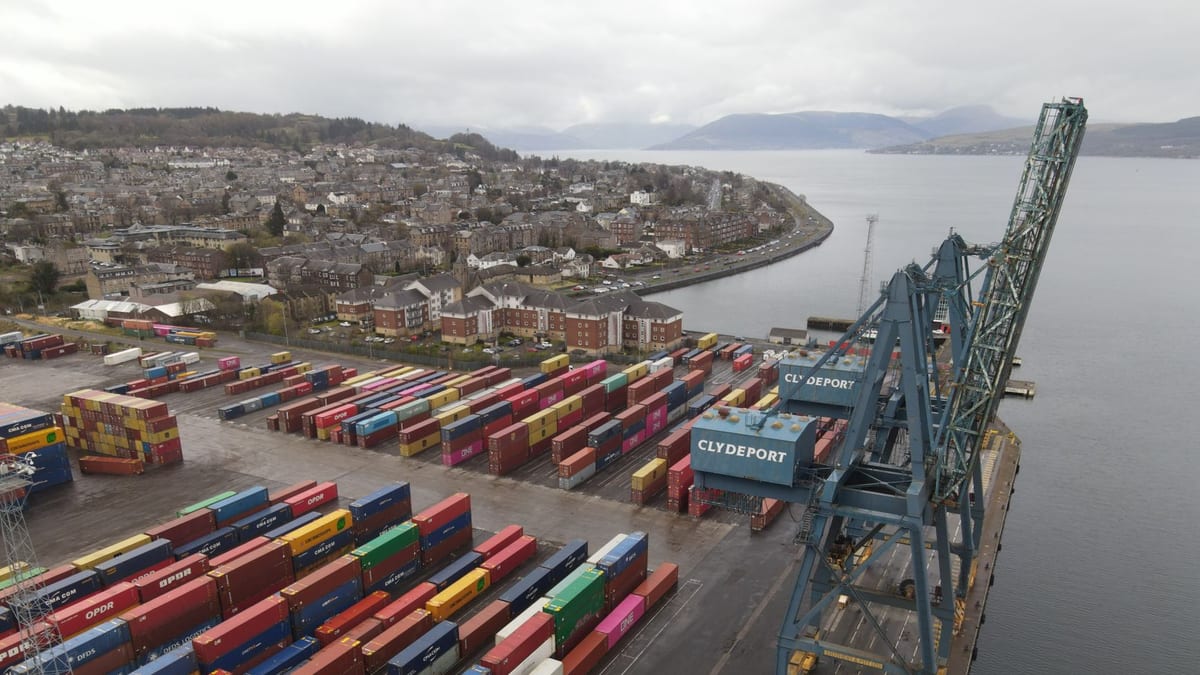
UK importers ask this question early and it usually matters less than they expect. Transit times from South India to the main UK container ports are close enough that the ocean leg is rarely the deciding factor.
What decides it is what happens after the container is discharged.
The three that handle the India trade
| Port | Typically suits | Notes |
|---|---|---|
| Felixstowe | Midlands, the North, East Anglia | The largest UK container port, deepest service coverage |
| Southampton | The South, South West, Wales | Often better inland economics for southern distribution |
| London Gateway | London and the South East | Modern facility, close to a lot of 3PL capacity |
Sea transit from Tuticorin, Chennai or Cochin runs 24–32 days port to port to any of them, routed via Suez. The spread within that range comes from transhipment, sailing schedules and canal conditions rather than from which UK port you chose.
The decision is inland, not maritime
Once the ocean leg is broadly equal, the question becomes: where do the goods need to be?
A container discharged at Felixstowe and trucked to Bristol costs more in drayage and takes longer than one discharged at Southampton. Reverse the geography and the answer reverses. For most UK importers this single consideration outweighs everything else.
The order to think about it:
- Where is the warehouse or 3PL? Nominate the nearest capable port.
- What is the drayage cost from each? Your forwarder can price both.
- What is current dwell like at each? This moves, and it moves more than the sailing time.
- Does your carrier actually call there? Not every service calls at every port.
The days that do not appear on a sailing schedule
Port-to-port is not door-to-door. Between them sit terminal dwell, customs clearance, and drayage to the warehouse.
These vary by port and by season, and in a bad week they swing further than the difference between any two UK ports. This is exactly what a forwarder tracks and a factory does not, which is why the sensible division of labour is that we quote to a port of loading and they choose the port of discharge.
Give your forwarder the destination, not the port
The most useful thing you can do is tell your forwarder where the goods need to end up and let them nominate. Brands that pick a port themselves, usually because they used it once before, routinely end up paying inland costs they did not model.
On FOB terms this is straightforward — the factory delivers to the port of loading, and everything after that is your forwarder’s leg. That is one of the reasons FOB is the default in apparel: it puts the routing decision with the party who has current information.
FCL or LCL, if the order is small
A first order of a few hundred garments will not fill a container, which puts you in LCL — less than container load, where your pallets share a box with other shippers.
| FCL | LCL | |
|---|---|---|
| Suits | Full or near-full loads | Small consignments |
| Cost | Cheaper per unit at volume | Cheaper in absolute terms for small volumes |
| Handling | Sealed at origin, opened by you | Consolidated and deconsolidated en route |
| Timing | More predictable | Adds days at both ends |
LCL is the right answer for a trial order and it is worth knowing what it costs you in predictability. The consignment waits for consolidation at origin and for deconsolidation at destination, and both are outside anyone in your chain controlling them directly.
One practical consequence: cartons in an LCL shipment are handled more, so carton quality and marking matter more than they do in a sealed full container. Ask your supplier what carton specification they are using.
Air, for the cases that justify it
From Coimbatore or Chennai into Heathrow, typically 4–6 days. Expensive per kilogram and worth it in exactly two situations: a sample that is holding up an approval, and a replenishment where being out of stock costs more than the freight.
For anything else, air freight on apparel is usually a symptom of a plan with no slack in it.
Build the schedule honestly
For a UK first order:
- Quotation: 1–2 working days
- Sampling: 20–40 days per round, plus your own approval time
- Production: 30–45 days after sample approval
- Sea: 24–32 days
- Clearance and inland: variable, ask your forwarder
That is two to three months from commitment to sellable stock. The port choice moves it by a day or two. The number of sampling rounds moves it by weeks, which is where the attention belongs.
Before the freight, the paperwork
None of the above matters if the documents are not right. What your customs broker needs covers the set, and what actually changed for UK importers after Brexit covers the requirements that sit around it.
If you are earlier still and choosing a supplier, that comes first.
We ship into Felixstowe, Southampton and London Gateway from Tuticorin, Chennai and Cochin, with the full document set prepared alongside each consignment. We supply UK brands and wholesalers from 300 pieces per style per colour — tell us where the goods need to land and we will quote to whichever port your forwarder prefers.
Keep reading

Importing apparel into the UK after Brexit: what changed
Less changed for goods from Asia than people assume, and more changed for goods from the EU. What a UK apparel importer actually needs now, and what to hand to a customs broker.
What your customs broker needs from your supplier
Five documents and three facts. Get them prepared alongside the shipment rather than chased after it sails, and clearance stops being the part of importing that goes wrong.

Children's clothing manufacturers: what to ask before you order
Children's garments carry obligations adult ones do not — cords, trims, labelling and traceability. The questions a UK buyer should ask a factory before placing an order, and what a good answer sounds like.