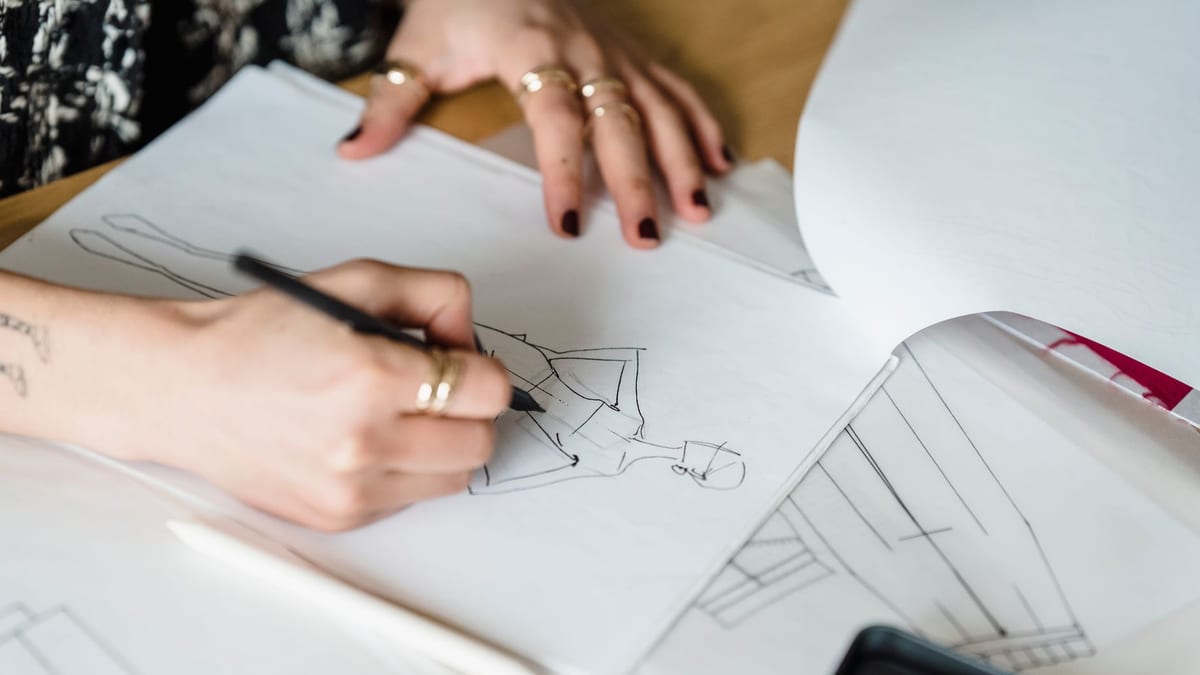
A UK brand has three broad options, and the right one depends much more on what you are making and how fast you need it than on where you would prefer to source.
Here is what each actually gives you, and the verification that applies regardless.
The three options
| Best for | Trade-off | |
|---|---|---|
| UK domestic | Very short runs, rapid turnaround, “Made in UK” as a selling point | Higher unit cost, limited fabric range, small capacity for knits |
| Near-shore (Portugal, Turkey, Eastern Europe) | Fast replenishment, mid-volume, shorter lead times | Costs more than Asia, less depth in some categories |
| Overseas (India, Bangladesh, Vietnam, China) | Volume, unit cost, deep fabric and finishing options | Longer lead times, more verification work up front |
UK domestic manufacturing is genuinely alive — there is real capacity in Leicester, London and the North West — but it is concentrated in short-run, cut-and-sew and sampling work. For volume cotton knitwear the fabric side is the constraint: the spinning, knitting, dyeing and finishing capacity that sits within a few kilometres of an overseas cluster does not exist domestically at that density.
That is not a knock on UK manufacturing. It is why the two serve different purposes, and why a lot of UK brands end up running both.
What Brexit actually changed for sourcing
Less than people assume for goods coming from outside Europe, and more than people assume for goods coming from inside it.
Imports from Asia were always third-country imports and still are. What changed is EU-origin goods, which now carry customs formalities they did not before — so the old “just order from Portugal, it’s basically domestic” logic no longer holds without paperwork.
Rules of origin, preference agreements and duty rates all move with policy, and none of it is something a factory can advise you on. Confirm your duty position and any preference claims with your own customs broker before you cost a programme.
The arithmetic that decides your first range
Wherever you source, minimums are quoted per style, per colour. One style in four colours is four minimums.
A “small” first range of four styles in four colours is sixteen minimums, and at 300 pieces each that is 4,800 garments before anyone has proven a single one sells. This catches more first-time UK brands than any sourcing decision does.
The fix is fewer styles and fewer colours, not a lower minimum. What a 300-piece minimum actually commits you to goes through the numbers.
If that commitment still looks too large for an unproven design, the honest answer is to stay on branded blanks for another season. Private label and white label are different propositions with different ceilings, and moving between them is not a one-way door.
Verifying a supplier, wherever they are
The single most useful question, and it works on a Leicester unit as well as a Tirupur one:
Which production stages happen inside your building? For knitwear that is knitting, dyeing, cutting, stitching, decoration and packing. A factory answers immediately and names what it subcontracts — nobody owns all six. An agent says “we handle everything”, which sounds better and means less.
Then:
- Ask for a video walkthrough on short notice. Not a scheduled one a fortnight out.
- Verify registration. For an Indian supplier, ask for the GSTIN and Import Export Code and check both online — it takes two minutes.
- Send a small trial order. It teaches you more than any amount of due diligence.
The fuller checklist covers shade continuity, lead time breakdowns and how a supplier handles the first piece of bad news.
What to have ready before you approach anyone
You cannot compare quotes for a brief that does not exist:
- Garment type and fit
- Fabric and weight, with a tolerance
- Your size chart — in measurements, not just letters
- Decoration method, positions and colours
- Labels, tags and packaging
- Quantity per style per colour, and the date you need stock
The size chart matters more for a UK brand than most people expect, because UK and US grading are not the same and a tech pack that does not say which it is grading to will get you whichever the factory usually runs.
If children’s wear is in the range
It changes the conversation, and the obligations sit with you as the importer rather than with the factory. Cords, small parts, traceability and labelling all have their own requirements — what to ask a children’s wear factory covers it, and it is worth reading before you design rather than after you sample.
A realistic timeline
For an overseas first order: 1–2 working days for a quote, 20–40 days per sampling round, 30–45 days production after sample approval, then 24–32 days sea freight into Felixstowe or Southampton.
Add your own approval rounds honestly. Two to three months from commitment to stock is normal, and planning as though it is six weeks is how brands miss a season.
We manufacture cotton knitwear in Tirupur for UK brands, wholesalers and workwear suppliers — cutting, stitching, finishing, UK-market labelling and export packing on our own floor, with knitting and dyeing at partner units we manage. Trial orders start at 300 pieces per style per colour. Send us a brief and we will come back with a quote and a lead time we can hold — including telling you if we are the wrong factory for that particular style.
Keep reading
Choisir un fabricant de T-shirts en marque propre en Inde
Un guide pratique pour les marques françaises : cahier des charges, validation du prototype, partenaires de production et préparation de l’importation.
How to choose a private-label clothing manufacturer for a Spanish brand
A practical sourcing checklist for Spanish apparel brands comparing private-label production in India, from samples and specifications to import planning.
T-Shirts aus Indien einkaufen: Leitfaden für deutsche Marken
Ein Leitfaden für deutsche Marken: technische Spezifikation, Musterfreigabe, Produktionspartner und Importplanung für T-Shirts aus Tirupur.