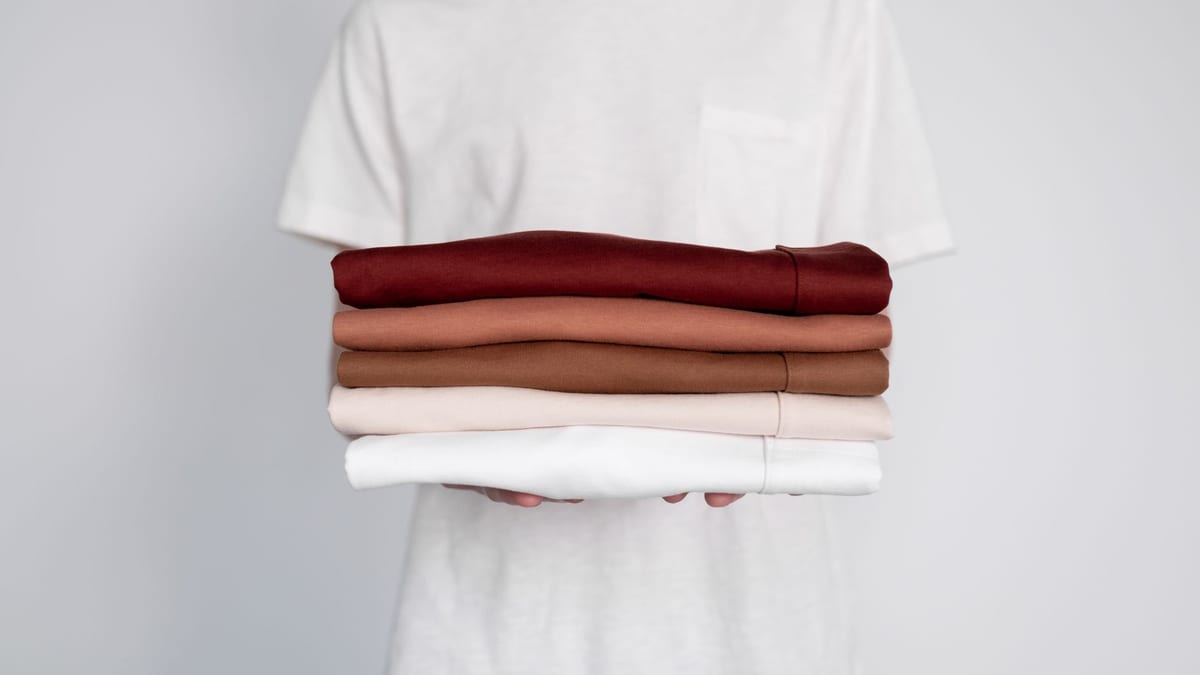
Brands spend heavily on acquiring the first order and then lose the second one to a garment that did not survive laundry. Nobody writes in to complain that a tee lost its shape — they simply stop buying, and the brand reads the resulting number as a marketing problem.
In apparel, retention is a manufacturing decision made months earlier — usually at the point where a factory and a spec were chosen.
What actually fails, in order of frequency
The collar. By a wide margin the most common failure. A tee whose neckline has stretched into a wavy oval looks worn out even if the body is perfect. Two things cause it: rib that is too light for the fabric weight it has to hold, and the absence of shoulder-to-shoulder taping. Both are cost-saving decisions made at spec stage that the buyer never sees on the sample.
Shrinkage. A garment that fits at purchase and does not fit after two washes reads to the customer as a sizing lie. The cause is fabric that was not compacted and pre-shrunk before cutting. Some shrinkage is unavoidable in cotton; 8% is not.
Pilling. Those small fibre balls across the chest and under the arms. This is a yarn decision — carded cotton contains short fibres that work their way out under friction. Combed cotton does not, because those fibres were removed before spinning.
Print failure. Cracking, peeling or fading after a handful of washes. Usually a mismatch between decoration technique and fabric, and almost always avoidable by wash-testing before the bulk run rather than after. The ink you choose decides how the print ages as much as how it feels on day one.
Seam failure. Side seams opening at the hem, or shoulder seams giving way. Stitch density and thread quality, both invisible on the sample and obvious by month three.
The four spec decisions that determine all of it
Combed, not carded. The single highest-leverage decision. It adds a modest amount per piece and removes the pilling complaint almost entirely.
Compacted and pre-shrunk fabric. Ask explicitly. It is a processing step suppliers skip quietly when they are competing hard on price, and it is the difference between a garment that fits in month six and one that does not.
Ribbed neck with shoulder taping. A 1x1 rib matched to the body weight, with tape across the shoulder seam. Costs very little and prevents the most common failure on the list. It is standard on every knit style we run, not an upgrade you have to ask for.
Wash-test the decoration before bulk. Five domestic wash cycles on the pre-production sample. If the print survives that, it will survive the customer.
Why the sample never reveals this
Every one of these failures appears after repeated laundering. A pre-production sample, examined new, looks identical whether it was made with combed or carded yarn, compacted or uncompacted fabric, taped or untaped shoulders.
This is why buyers who evaluate suppliers on sample quality alone end up disappointed by bulk, and why the discipline that matters is washing your sample rather than admiring it. It is also why the questions you ask a supplier do more work than anything you can see with your own eyes.
The commercial case
A returning customer costs a fraction of a new one, and in apparel the repeat rate is heavily determined by whether the last garment still looks acceptable when they reach for it. A brand with a 40% repeat rate and a brand with a 15% repeat rate can be selling the same design at the same price — the difference is often four spec decisions worth a few cents each.
Put the other way: the cheapest possible tee is rarely the cheapest tee to sell. None of the four decisions above depend on ordering deep, either — they apply to a first run of a few hundred pieces exactly as they do at thirty thousand.
We specify combed cotton as standard, have the fabric compacted and pre-shrunk before it reaches our cutting floor, and tape the shoulders. If you want a sample to wash five times before deciding, that is exactly what a sample is for — request one.
Keep reading
How to vet a T-shirt manufacturer in India before you place an order
Nine checks that separate an actual factory from a trading office with a good website — written by a manufacturer who would rather you asked.

Fabric dyeing and shade matching: why repeat orders drift
Colour that moves a fraction each season is the failure that loses uniform contracts. What a lab dip is, why matching against the last batch is a slow disaster, and what to put in writing.
AQL inspection explained for first-time importers
What an AQL inspection actually checks, what the numbers mean, when to book one, and why a factory that welcomes a third-party inspector has told you something useful.