
If you have sourced cotton t-shirts from India, the goods almost certainly came from one district in Tamil Nadu. Buyers hear the name constantly and rarely get told what it actually means.
What is Tirupur famous for?
Cotton knitwear. Specifically t-shirts, polos, hoodies, children’s wear and the knitted cotton garments that sit around them — made for both the Indian domestic market and for export.
It is not a general apparel centre. India’s garment industry is regional and specialised: Ludhiana in Punjab does woollens and winter wear, Noida and Jaipur do woven and embroidered garments, Bengaluru does a lot of formal and export woven. Tirupur does knits.
That matters when you are shortlisting. A Tirupur unit will happily quote you a woven shirt and then place it somewhere else, which puts you two steps away from whoever is actually sewing your order.
Why did it concentrate in one place?
Four decades of specialisation, and the compounding that follows it.
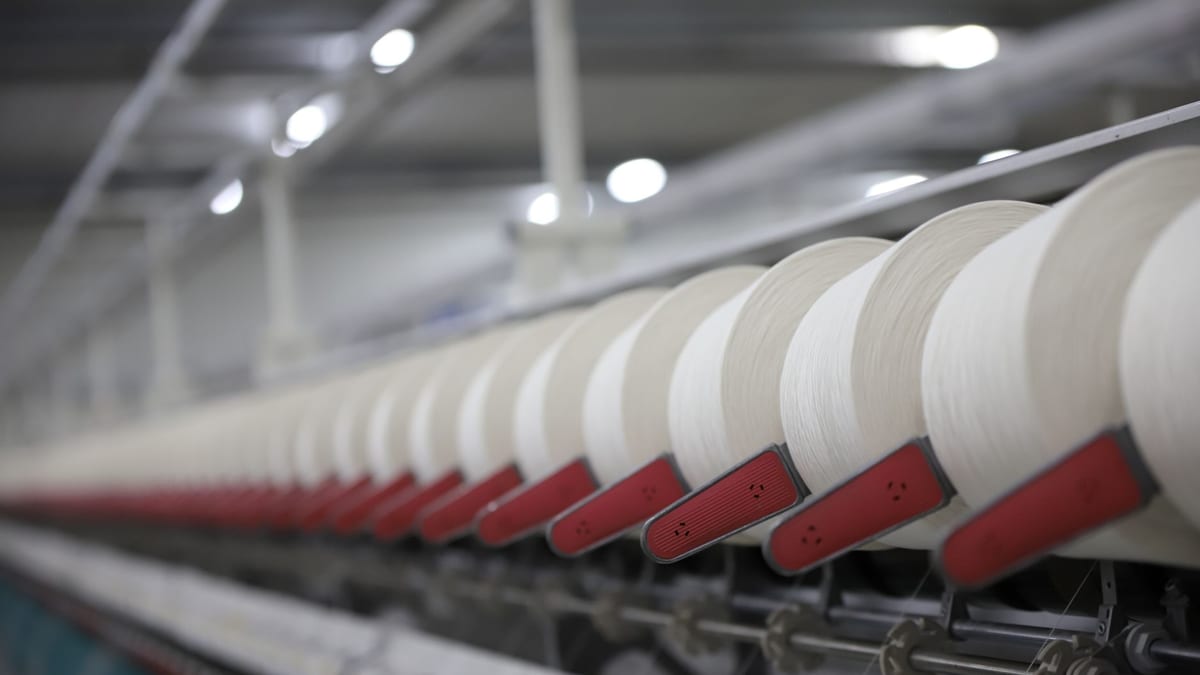
Once enough knitting and dyeing capacity existed in one district, it became rational for yarn spinners to be near it. Then accessory makers — labels, tags, buttons, elastic, thread. Then printers, embroiderers, compacting and finishing units. Then the people who repair the machines, and the people who train the operators.
Today those are all within a few kilometres of each other. That is the whole story, and it is why the cluster is difficult to replicate somewhere cheaper — the same mechanism that decides where clothes get manufactured globally, at district scale.
What the concentration actually does for a buyer
Three practical effects, and they are the reason to care:
Lead times hold under pressure. If a trim runs short mid-production, it can be sourced the same afternoon rather than the next week. In a dispersed supply base every input has to travel, and every journey is a chance for the date to slip.
Fabric options are real, not theoretical. A factory here can knit to the weight your style needs rather than working from whatever the market has stock of. That is the difference between a spec and a suggestion.
Problems get solved locally. A shade that needs re-dipping, a print that fails a wash test, a machine that goes down — all of these are fixable within the district rather than becoming a schedule event.
None of this is a claim about any individual factory. It is a claim about the place, and it is the honest reason a buyer ends up here.
What is actually here, stage by stage
The cluster is not one kind of business. It is six, sitting on top of each other:
| Stage | What the district holds |
|---|---|
| Spinning | Yarn mills supplying combed and carded cotton |
| Knitting | Circular knitting for jersey, pique, interlock, rib, fleece |
| Dyeing and finishing | Dyehouses, compacting, pre-shrinking, bio-washing |
| Cutting and stitching | The garment units themselves |
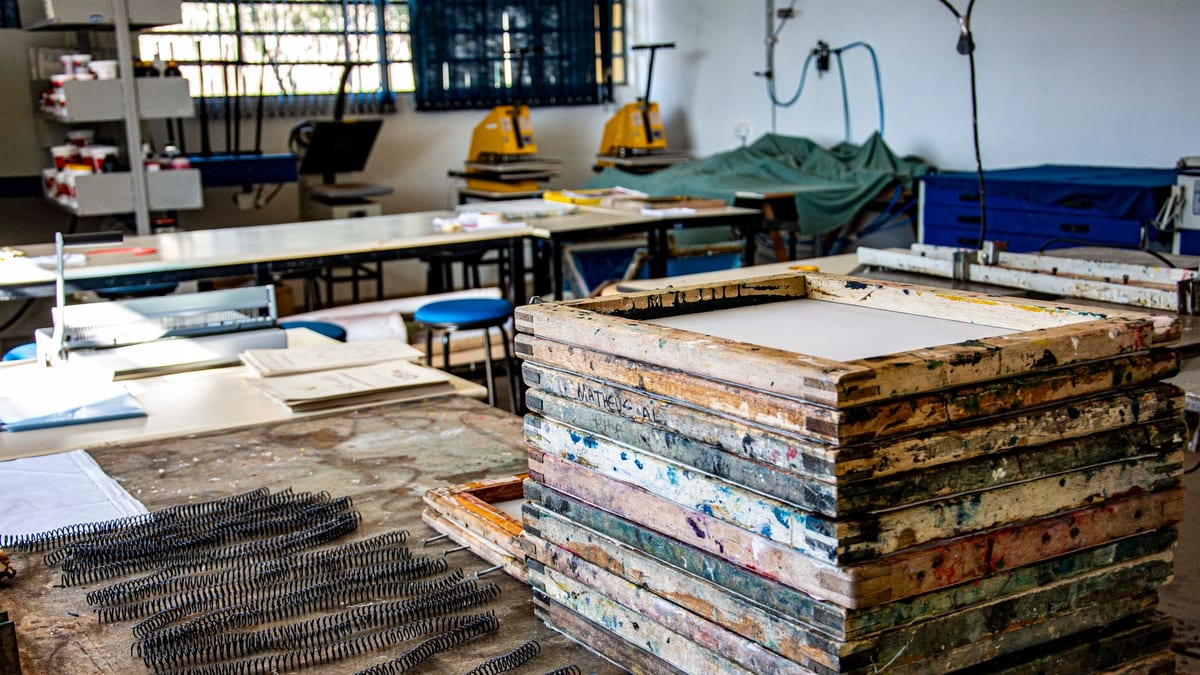
| Decoration | Screen, digital and transfer printing, plus embroidery |
| Trims and packing | Labels, tags, elastic, thread, polybags, cartons |
Dyeing is the stage that most often sits outside a garment factory’s own walls, even for large exporters, which is why how a supplier handles shade matching is worth asking about specifically rather than assuming.
The other thing the list explains is why a Tirupur quotation can move quickly. Every one of those six stages has an alternative a few kilometres away, so a bottleneck is usually a phone call rather than a schedule change.
The part of the concentration nobody advertises
The same density that makes Tirupur efficient makes it hard to read from the outside.
Because everything is close together, an office with three desks can present as a manufacturer entirely convincingly. They can send you photographs of a floor, quote from a real price list, and place your order with whichever unit has capacity that month. Sometimes it works. Often quality swings between shipments because it is not the same unit twice, and nobody in the chain can tell you why.
This is not a Tirupur problem specifically — it exists in every sourcing cluster. It is just more available here, because there are more units to place an order with. The countermeasure is the same as anywhere: ask which production stages happen inside their building, and verify rather than believe.
Getting here
Coimbatore International Airport is roughly an hour by road from Tirupur, and connects through Dubai, Doha, Singapore and the Gulf. That makes a factory visit a realistic day rather than an expedition, which is worth knowing if you have been assuming an inspection means a week.
For goods going the other way, the export ports are Tuticorin, Chennai and Cochin, with air freight through Coimbatore or Chennai for samples and urgent replenishment.
Where this sits in a sourcing decision
Choosing Tirupur is choosing a product category and a supply base. It is not choosing a supplier, and the second decision is much harder than the first — the wider buyer’s guide to sourcing from India covers minimums, lead times and the questions that separate a factory from a trading office.
If you already know what you want made, the range we make here is the practical version of everything above.
Our own unit is on Kangeyam Road, Muthanampalayam, in Tirupur — cutting, stitching, finishing and packing — with the knitters and dyehouse we use a few kilometres away. Come and see all of it, or send a third-party inspector, or start with a small order and let the goods make the argument. Tell us what you are making and we will come back with a quote and a lead time we can hold.
Keep reading
Clothing manufacturers in India: a buyer's guide to sourcing, MOQs and lead times
What it actually takes to get garments made in India — how to tell a factory from an agent, what minimums and lead times are realistic, and what a private label programme involves.

Fabric dyeing and shade matching: why repeat orders drift
Colour that moves a fraction each season is the failure that loses uniform contracts. What a lab dip is, why matching against the last batch is a slow disaster, and what to put in writing.
Screen, DTG, DTF or sublimation: choosing a decoration method
Four ways to get a design onto a garment, and what each one is actually good at. Fabric, quantity, colour count and hand-feel decide it — not preference.